Synthetic Slings
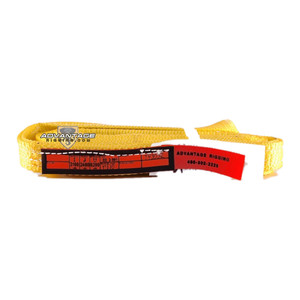
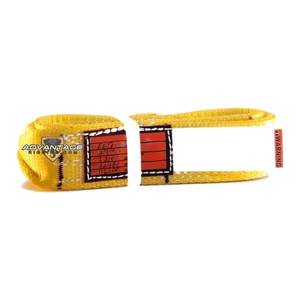
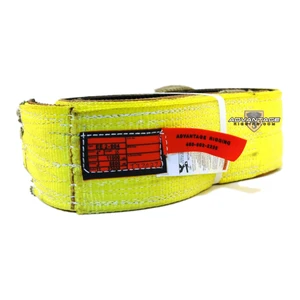
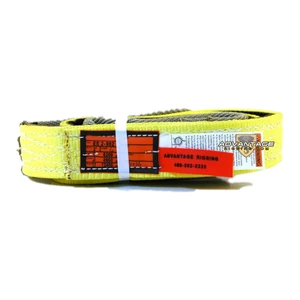
Advantage Rigging sells nylon and polyester lifting slings, also called crane straps or lifting straps, in eye and eye, endless and round styles. Vertical working load limits (WLL) run from 1,600 lb to 60,000 lb, and each sling's tag shows its rating for vertical, choker and basket hitches. Made in the USA. Need a size you don't see? Call 480-502-2225. Ships from Gilbert, AZ.
Shop by type: Nylon eye and eye · Nylon endless · Slip resistant · Polyester round. Related: Sling protectors · Sling packages · Sling inspection · Chain slings
Crane strap types and WLL chart
Choose a type and size whose rating for your hitch meets or exceeds the load. Basket ratings assume both legs are vertical, and capacity drops as the legs angle out. The WLL on your sling's tag always governs. Each nylon page has the full chart by width and ply.
| Type | Sizes | Vertical WLL (lb) |
|---|---|---|
| Nylon twisted eye and eye | 1" to 12" wide, 1 to 4 ply, 3 to 30 feet | 1,600 to 60,000 |
| Nylon endless | 1" to 3" wide, 1 and 2 ply, 3 to 14 feet | 3,200 to 12,400 |
| Nylon slip resistant | 2" and 4" wide, 2 ply, 3 to 10 feet | 6,200 and 11,000 |
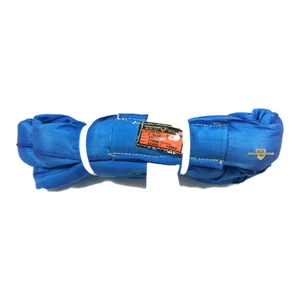
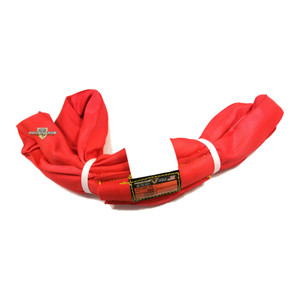
| Polyester round | 5 colors by capacity, 2 to 24 feet | 2,600 to 21,200 |
| Color | Vertical (lb) | Choker (lb) | Basket (lb) |
|---|---|---|---|
| Purple | 2,600 | 2,100 | 5,200 |
| Green | 5,300 | 4,200 | 10,600 |
| Yellow | 8,400 | 6,700 | 16,800 |
| Red | 13,200 | 10,600 | 26,400 |
| Blue | 21,200 | 17,000 | 42,400 |
Crane and lifting strap questions
What is a crane strap?
A crane strap, also called a lifting strap, web sling or synthetic sling, connects a load to a crane or hoist hook. Our crane straps are made of nylon webbing or polyester and rated for overhead lifting. Ratchet straps and tie-down straps are for securing cargo, not lifting: see ratchet straps if you need those.
What is the difference between eye and eye, endless and round slings?
An eye and eye sling is a flat strap with a loop at each end. An endless sling is a continuous loop of webbing you can rotate between lifts so the wear points change. A round sling is a continuous loop of polyester inside a protective cover, and its color shows its capacity.
Should I choose nylon or polyester?
It depends on the job site. OSHA 1910.184 says nylon web slings must not be used around acids or phenolics, and polyester web slings must not be used around caustics. Neither may be used above 180°F. Nylon also stretches more than polyester under load.
How do I pick the right size?
Start with the load weight and how you will rig it. Choose a sling whose rating for that hitch meets or exceeds the load, and whose length lets the legs stay as close to vertical as you can. For example, a 2" 2-ply nylon eye and eye sling is rated 6,200 lb vertical, 4,960 lb choker and 12,400 lb basket.
How often do lifting slings need to be inspected?
OSHA 1910.184 requires a competent person to inspect each sling every day before use. ASME B30.9 also calls for documented periodic inspections at least once a year, and more often in severe service. Advantage Rigging inspects slings: see Sling Inspection.
When must a lifting sling be taken out of service?
OSHA 1910.184 requires immediate removal of a synthetic web sling for acid or caustic burns, melting or charring of any part of the surface, snags, punctures, tears or cuts, broken or worn stitches, or distorted fittings. ASME B30.9 also removes a sling when its tag is missing or unreadable.
How do I protect a lifting sling from sharp edges?
Keep the sling off sharp corners and rough surfaces, and use sling protectors where it contacts them. Cuts are a removal condition, so protection helps the sling last.