
Posted by Advantage Rigging on 8th Sep 2025
Proof Testing in Rigging: OSHA and ASME Standards Explained | Advantage Rigging
A sling failure isn’t just costly, it’s dangerous. That’s why proof testing is one of the most important steps before your gear hits the field.
Proof testing in rigging is the process of applying a controlled overload, typically 125% of the rated capacity, to slings, chains, or hardware to verify strength, detect hidden flaws, and meet OSHA and ASME safety standards.
Heading into the busy season, making sure your gear is ready isn’t optional. Proof testing gives you confidence on the hook instead of risking chaos on the ground.
What is Proof Testing in Rigging?
Proof testing is a stress test for your gear. Instead of only looking at a sling or shackle, the equipment is put under load to prove it can handle the job.
For example, a sling rated for 4,000 pounds will be tested at 5,000 pounds. If it holds without permanent damage, you know it’s safe to use.
This is different from inspection. Inspection checks for visible wear, cracks, or rust. Proof testing verifies internal strength that you can’t see with the naked eye.
Why Proof Testing Matters This Season
Safety, compliance, and uptime become even more critical during fall when projects ramp up and downtime is more expensive.
-
Safety: Hidden cracks or weak splices can cause accidents. Testing finds them before your crew ever lifts.
-
Compliance: OSHA and ASME both require proof testing in specific situations. If an inspector asks for certificates, you need them on file.
-
Downtime Prevention: Fall is busy for construction, shipping, and logistics. If gear fails in the middle of a project, delays get expensive fast.
-
Equipment Life: Proof testing helps you catch early wear so you can repair or replace before the damage spreads. That keeps gear working longer.
Advantage Rigging provides Sling Proof Testing services that deliver safety assurance, prevent costly downtime, and keep your gear compliant.
What Equipment Needs Proof Testing?
-
Chain slings
-
Wire rope slings
-
Synthetic slings
-
Shackles, hooks, and eyebolts
-
Hoists and cranes
Each of these items has specific test ratios. Slings are usually tested at 125% of their working load limit. Hardware such as shackles and hooks are typically tested at 110%. Hoists and cranes must also undergo regular load testing before being put into service.
OSHA and ASME Requirements in Plain Language
-
OSHA 1926.251(a)(4): Any custom lifting device has to be tested to 125% of its rated capacity before it’s used for the first time.
-
ASME B30 Standards: These outline proof testing procedures for slings, hardware, hoists, and cranes. They set ratios between 110% and 125% depending on the gear.
In practice, this means every new sling, chain, or custom component needs testing and certification before it touches a jobsite. Advantage Rigging simplifies that process with certification-ready documentation, replacement tags, and accurate testing on our 225,000-pound Chant Engineering test bed.
The Proof Testing Process Step by Step
-
Secure the equipment in the test bed.
-
Apply the load gradually until it reaches the required proof load.
-
Hold the load for a short dwell time while the equipment is inspected.
-
Check for elongation, distortion, or other damage.
-
Tag the gear and issue a certificate if it passes.
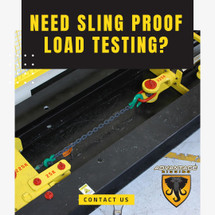
At Advantage Rigging, every sling or chain is run through our 2014 Chant Engineering horizontal test bed, which applies up to 225,000 pounds of force with unmatched accuracy. Advanced software captures detailed logs so your test records are compliance-ready. Learn more about our Sling Proof Testing process here.
Frequently Asked Questions
When is proof testing required?
Before the first use of new or repaired gear, after modifications, and at intervals specified by ASME or your site safety plan.
What is the proof load for a sling?
For most slings the proof load is 125% of the working load limit. Hardware like shackles and hooks are generally tested at 110%.
How often should rigging be proof tested?
After manufacturing, after repairs, and according to periodic schedules set by industry standards or company policies.
What’s the difference between proof testing and inspection?
Inspection is a visual check. Proof testing actually loads the gear to verify internal strength.
Stay Jobsite Ready
Proof testing is about more than compliance. It’s about keeping crews safe, preventing downtime, and protecting your investment in rigging gear.
If you’re gearing up for the busy season, now is the time to get your slings, chains, and hardware tested. Advantage Rigging provides OSHA and ASME compliant Sling Proof Testing with full certification and replacement tags.
Call 480-502-2225
Email info@advantagerigging.com
Visit advantagerigging.com